What Do Chameleons Eat? A Complete Nutrition Guide
Chameleons are fascinating creatures known for their color-changing skin and long, sticky tongues. To keep these exotic reptiles healthy in captivity, providing a diet that mimics their natural habitat is crucial. Unlike some other lizards, most chameleons are strictly insectivorous, meaning their diet revolves around live prey.
The Core Diet: Best Insects for Chameleons
Insects provide the protein and moisture chameleons need to thrive. Variety is key to preventing “hunger strikes” and ensuring a wide range of nutrients.
1. Staple Insects (Daily Feeding)
These should make up the bulk of your chameleon’s diet:
- Crickets: The most common feeder insect. They are active and trigger the chameleon’s hunting instinct.
- Dubia Roaches: Highly nutritious, easy to digest, and contain more protein than crickets.
- Silkworms: Excellent source of calcium and protein; they are also very hydrating.
- Hornworms: Great for hydration, but should be rotated as they grow very fast.
2. Occasional Treats
These are higher in fat and should be given only once or twice a week:
- Mealworms & Superworms: These have a tough outer shell (chitin), so feed them sparingly to avoid impaction.
- Waxworms: Very high in fat; perfect for “fattening up” a rescued or thin chameleon.
- Black Soldier Fly Larvae: Naturally high in calcium.
Do Chameleons Eat Fruits and Vegetables?
While most chameleons are insectivores, some species—specifically Veiled Chameleons—are known to nibble on plant matter for extra hydration and fiber.
- Safe Greens: Mustard greens, collard greens, and dandelion leaves.
- Safe Fruits: Small pieces of papaya, melon, or berries (very rarely).
- Note: If you have a Panther Chameleon, they rarely eat plants, so focus almost entirely on insects.
The Secret to Health: Gut-Loading & Supplements
A feeder insect is only as nutritious as the food it eats. This process is called “Gut-loading.”
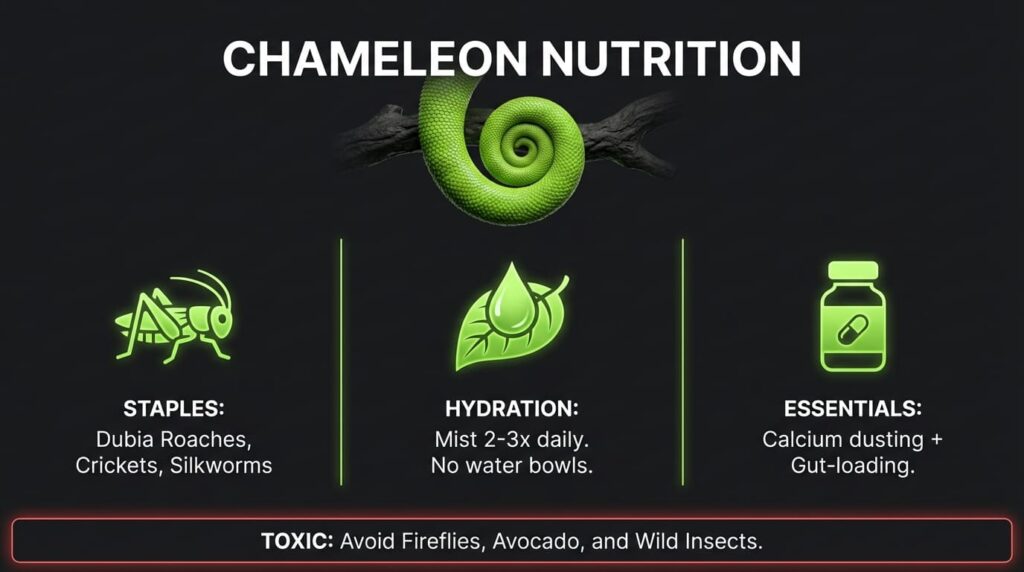
- Gut-Loading: Feed your insects high-quality vegetables (carrots, squash, leafy greens) 24 hours before offering them to your chameleon.
- Calcium Powder: Dust your insects with calcium powder (without D3) at almost every feeding.
- Vitamin D3 & Multivitamins: Use these sparingly (usually twice a month) to prevent metabolic bone disease.
Hydration: They Don’t Use Water Bowls!
One of the biggest mistakes new owners make is providing a water bowl. Chameleons do not recognize standing water.
- Misting: Mist the enclosure 2-3 times a day so the chameleon can drink droplets off the leaves.
- Dripper System: A slow-release dripper ensures they have access to water throughout the day.
Frequently Asked Questions (FAQs)
Conclusion
Feeding a chameleon is about more than just tossing in a few crickets. By focusing on a variety of gut-loaded insects, proper calcium supplementation, and ensuring they have plenty of leaf-dripping water, you can help your pet live a long and vibrant life.