Top 5 Chameleon Species: A Guide to the Most Popular Types
Chameleons are arguably the most distinctive members of the reptile kingdom. Belonging to the family Chamaeleonidae, there are over 200 recognized chameleon species currently known to science. These specialized lizards are famous for their zygodactylous feet (split toes), independently mobile eyes, lightning-fast tongues, and, most famously, their ability to change skin color.
While they all share these remarkable traits, the diversity within the species is staggering. From giants that grow to the size of a domestic cat to tiny leaf-dwellers no larger than a fingernail, understanding the different species is the first step for any enthusiast or aspiring keeper.
1. The Veiled Chameleon (Chamaeleo calyptratus)
The Veiled Chameleon is perhaps the most iconic species in the pet trade. Native to the harsh environments of Yemen and Saudi Arabia, they have evolved to be incredibly resilient.
Key Characteristics
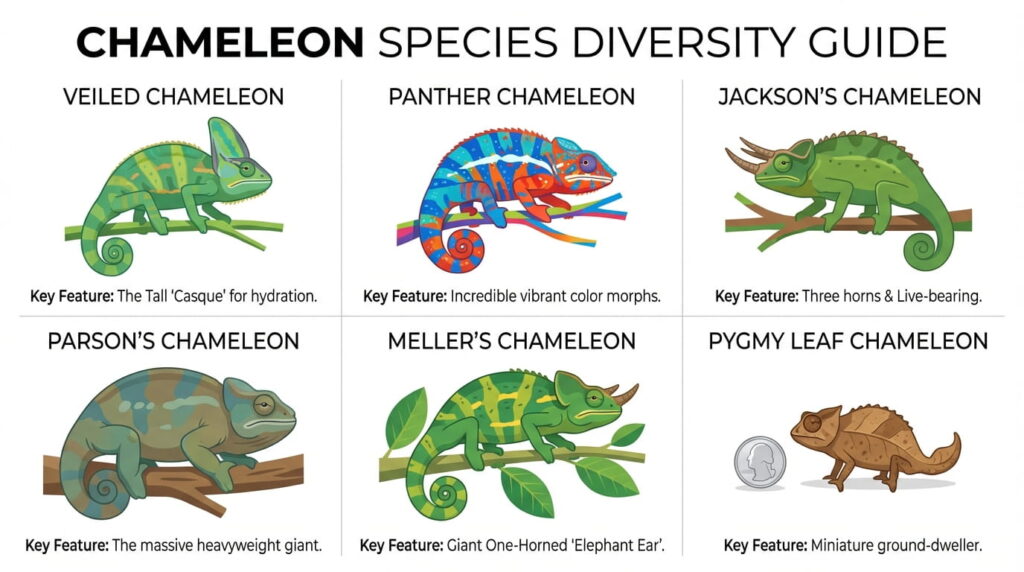
The most striking feature of the Veiled Chameleon is its “casque”—the tall, helmet-like crest on its head. This isn’t just for show; the casque helps channel morning dew directly into the chameleon’s mouth in arid climates.
Temperament and Care
While hardy, they are known for their “feisty” personalities. They are highly territorial and generally do not like being handled. In captivity, they require a mix of insects and, uniquely, some leafy greens for hydration.
2. The Panther Chameleon (Furcifer pardalis)
If the Veiled Chameleon is the most popular, the Panther Chameleon is undoubtedly the most beautiful. Originating from the tropical island of Madagascar, this species is the “canvas” of the reptile world.
The Magic of Localities
Unlike other chameleon species, Panther Chameleons are categorized by “localities”—the specific regions in Madagascar they come from.
- Ambilobe: Known for “blue-bar” or “red-bar” patterns.
- Nosy Be: Famous for their solid, electric blue coloration.
- Sambava: Displays vibrant greens and yellows with maroon bars.
Suitability as Pets
Panther chameleons are generally calmer than Veileds. However, they require more precise humidity and temperature control to thrive, making them a “Level 2” pet for those with some experience.
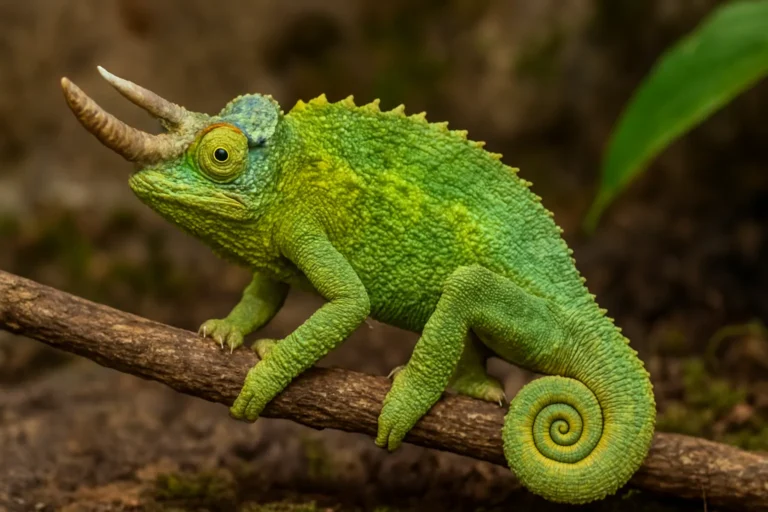
3. Jackson’s Chameleon (Trioceros jacksonii)
Often referred to as the “Three-Horned Chameleon,” the Jackson’s Chameleon looks like a miniature dinosaur. Native to the high-altitude forests of East Africa (and now an invasive species in Hawaii), they prefer cooler temperatures.
Unique Biology
Most chameleons lay eggs, but Jackson’s Chameleons are ovoviviparous, meaning they give birth to live young. This is an evolutionary adaptation to the cooler mountain climates where eggs might not survive on the ground.
Appearance
Males possess three prominent horns used for jousting with rivals, while females usually have no horns or very small ones. Their skin is typically a dusty green with some yellow accents.
4. Parson’s Chameleon (Calumma parsonii)
The Parson’s Chameleon is the heavyweight champion of the family. Native only to the primary rainforests of eastern Madagascar, these are some of the largest chameleons in existence.
Size and Longevity
A male Parson’s can weigh over 700 grams and live for up to 20 years—an incredible lifespan for a lizard. They have a calm, almost soulful presence, moving much more slowly than their smaller cousins.
Conservation Challenge
Due to their slow reproductive rate and habitat loss, they are rare in the pet trade and extremely expensive. They require massive enclosures and very specific “cool” tropical conditions.
5. Meller’s Chameleon (Trioceros melleri)
Often called the “Giant One-Horned Chameleon,” this species is the largest found on the African mainland (Malawi, Mozambique, Tanzania).
Distinguishing Features
They are known for their “elephant ear” lobes (small occipital flaps) and their stunning leaf-green skin patterned with yellow stripes and brown spots. Unlike most chameleons that live 3–5 years, a healthy Meller’s can live over a decade.
6. Pygmy and Leaf Chameleons (Rhampholeon & Brookesia)
On the opposite end of the spectrum are the Pygmy Chameleons. These tiny creatures have abandoned the trees to live among the leaf litter on the forest floor.
Master of Disguise
Species like Brookesia micra are so small they can stand on the head of a matchstick. Their bodies are shaped and colored exactly like a dead, brown leaf. Unlike their tree-dwelling cousins, they do not have prehensile tails; instead, their tails are short and used for balance on the ground.
Comparing Popular Chameleon Species
| Feature | Veiled Chameleon | Panther Chameleon | Jackson’s Chameleon |
| Origin | Yemen/Saudi Arabia | Madagascar | East Africa/Hawaii |
| Difficulty | Beginner | Intermediate | Intermediate |
| Diet | Insects & Greens | Strictly Insects | Strictly Insects |
| Birth Type | Egg-laying | Egg-laying | Live-bearing |
| Max Lifespan | 5-8 Years | 5-7 Years | 5-9 Years |
Choosing the Right Species for You
When selecting from various chameleon species, you must consider your commitment level.
- For Beginners: The Veiled Chameleon is the best entry point due to its tolerance for humidity fluctuations.
- For Color Enthusiasts: The Panther Chameleon is unbeatable but requires a higher budget for automated misting systems.
- For “Dinosaur” Lovers: The Jackson’s Chameleon offers a unique look but requires very specific nighttime temperature drops.
Common Threats to All Species
Regardless of the species, all chameleons are susceptible to Metabolic Bone Disease (MBD) if they do not receive proper UVB lighting and calcium. Additionally, stress is a major killer; these animals are “display pets,” not “cuddle pets.”
Conclusion
From the towering casque of the Veiled to the microscopic size of the Pygmy, chameleon species represent some of nature’s most creative evolutionary paths. Whether you are a researcher or a hobbyist, respecting their specific environmental needs is the key to appreciating these modern-day dragons.