What Do Bearded Dragons Eat? A Complete Nutrition Guide
Bearded dragons (Pogona) are among the most popular pet reptiles due to their docile nature and unique personalities. However, their health depends heavily on a balanced diet. As omnivores, their nutritional needs change significantly as they grow.
In this guide, we will break down exactly what bearded dragons eat, from protein-packed insects to nutrient-dense greens.
Understanding the Bearded Dragon Diet
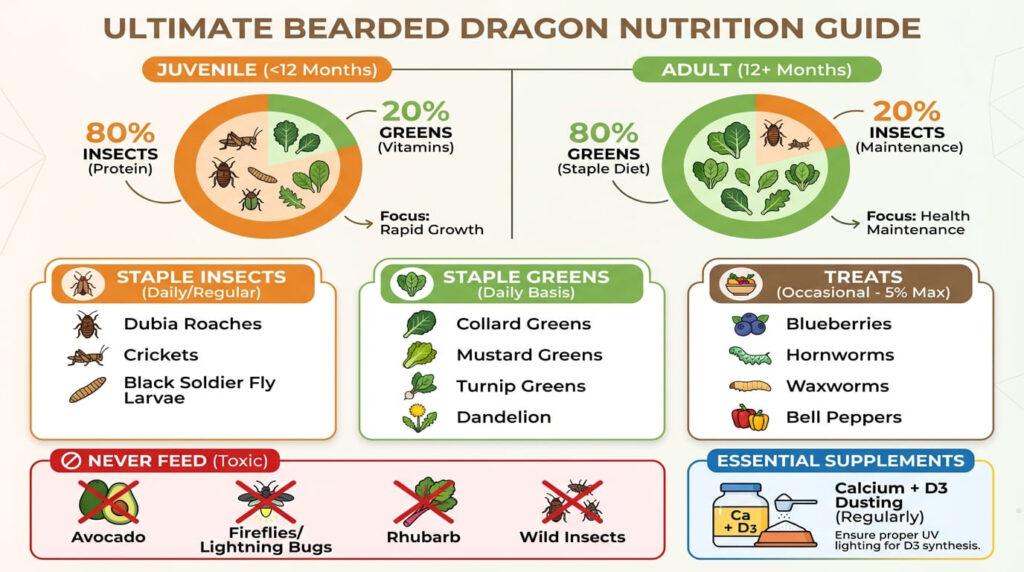
A healthy bearded dragon diet consists of a mix of live insects (animal protein) and vegetables/greens (plant matter). The ratio of these components depends on the dragon’s age:
- Juveniles (0-12 months): Require 70-80% insects and 20-30% greens to support rapid growth.
- Adults (12 months+): Require 70-80% greens and only 20-30% insects to prevent obesity and kidney issues.
Best Insects for Bearded Dragons (The Protein Source)
Insects provide essential proteins and fats. Always ensure the insects are “gut-loaded” (fed nutritious food before being given to your dragon).
Staple Insects (Daily/Regularly)
- Dubia Roaches: The gold standard. High in protein, easy to digest, and low in chitin.
- Crickets: A popular and affordable choice, though they can be harder to keep alive.
- Black Soldier Fly Larvae (NutriGrubs/Phoenix Worms): Naturally high in calcium.
- Silkworms: Highly nutritious and soft-bodied.
Treat Insects (In Moderation)
- Mealworms & Superworms: High in fat and chitin; best for healthy adults only.
- Hornworms: Excellent for hydration but very high in water content.
- Waxworms: Very high in fat; think of these as “bearded dragon candy.”
Safe Vegetables and Greens (The Vitamin Source)
Greens should be offered daily. Focus on calcium-rich options and avoid those high in oxalates, which can bind calcium.
Best Staple Greens
- Collard Greens
- Mustard Greens
- Turnip Greens
- Dandelion Greens
- Escarole
Safe Vegetables to Mix In
- Squash (Butternut, Acorn, Yellow)
- Bell Peppers (Red, Orange, Yellow)
- Carrots (Finely shredded, occasionally)
- Snap Peas
Fruits: An Occasional Treat
Fruits should only make up about 5% of the total diet due to their high sugar content, which can lead to tooth decay and obesity.
- Safe Fruits: Blueberries, raspberries, strawberries, papaya, and mango.
- Avoid: Citrus fruits (oranges, lemons) as the acidity can upset their stomach.
Toxic Foods: Never Feed These to Your Bearded Dragon
Some common foods can be fatal to bearded dragons. Avoid the following:
- Fireflies/Lightning Bugs: Extremely toxic; even one can be fatal.
- Avocado: Contains high levels of persin, which is toxic to most reptiles.
- Rhubarb: High in oxalates, which lead to metabolic bone disease (MBD).
- Onions & Garlic: Can cause severe digestive distress.
- Wild-caught insects: May contain pesticides or parasites.
Supplements: Calcium and Vitamin D3
Even with a perfect diet, bearded dragons need supplements.
- Calcium Powder: Dust their food 3-5 times a week (for juveniles) or 2-3 times (for adults).
- Vitamin D3: Essential for calcium absorption if your UVB lighting isn’t sufficient.
- Multivitamins: Once a week or twice a month.
Conclusion
A thriving bearded dragon is a well-fed one. By transitioning from an insect-heavy diet as a juvenile to a plant-based diet as an adult, and ensuring proper calcium supplementation, you can ensure your pet lives a long, healthy life.
Quick Feeding Checklist
| Category | Frequency | Top Recommendation |
| Proteins | Daily (Juvenile) / 2-3x Week (Adult) | Dubia Roaches |
| Greens | Daily | Collard Greens |
| Treats | Once a week | Hornworms or Blueberries |
| Supplements | Regularly | Calcium with D3 |